Not every job on a property involves a tree. A good share of what we get called out for around Redding is ground-level work: a lot that has not been touched in three summers, a fence line disappearing into blackberry and brush, or a field of dry grass sitting a lot closer to the house than anyone is comfortable with. That work has its own equipment and its own season, so it has its own section of the site.
Four services sit under this heading. Land clearing takes a parcel back to usable ground. Brush removal deals with the heavy woody growth along fence lines, creek banks and property edges. Weed removal pulls out what keeps coming back around structures and hardscape. Weed mowing knocks down grass and light growth across the open areas and keeps it down through the dry months. Most properties need some combination of the four rather than one on its own.
Why this work matters in Shasta County
Grass in the north state cures early. Annual grasses and yellow starthistle that looked green in April are dry, brittle fuel by June, and they stay that way until the first real rain. Add the run of triple-digit afternoons Redding gets every summer and a field that felt like landscaping in spring is a different thing entirely by the middle of fire season.
There is also a legal side to it. California Public Resources Code 4291 requires 100 feet of defensible space around structures in State Responsibility Areas and in Very High Fire Hazard Severity Zones, measured from the building out to 100 feet or to the property line, whichever comes first. That 100 feet is treated as two zones: the first 30 feet, where dead material comes out and plants are spaced apart, and the 30 to 100 foot band, where the fuel volume is reduced and grass is kept short. A great deal of the ground around Redding, Shingletown, Igo, Millville and the surrounding foothills falls inside those designations.
We are a tree and land clearing company, not a fire agency, so we cannot sign off on an inspection or tell you that a property passes. What we can tell you is that most of what an inspector points at is the work described on this page, and that it is far easier to keep on top of than to catch up on.
What we usually find
- Grass and weeds well past knee height running right up to a house, shop or fence line
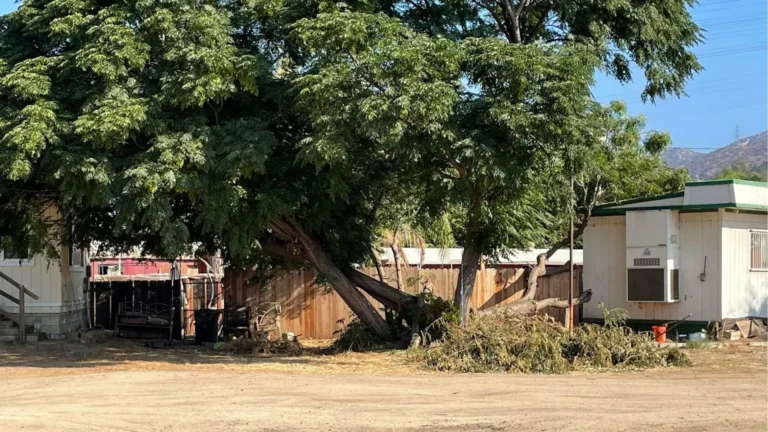
- Blackberry, manzanita and scrub that has closed off a driveway, gate or side yard
- Dead limbs, downed wood and old brush piles left behind from earlier work
- Star thistle and other stubborn weeds that came back stronger the year after being cut
- A lot that has to be cleared before fencing, grading, a build or a sale can move forward
- Ladder fuel, meaning low growth sitting directly under tree limbs, giving a ground fire a way up into the canopy
How the four services fit together
Start with clearing if the ground is not reachable
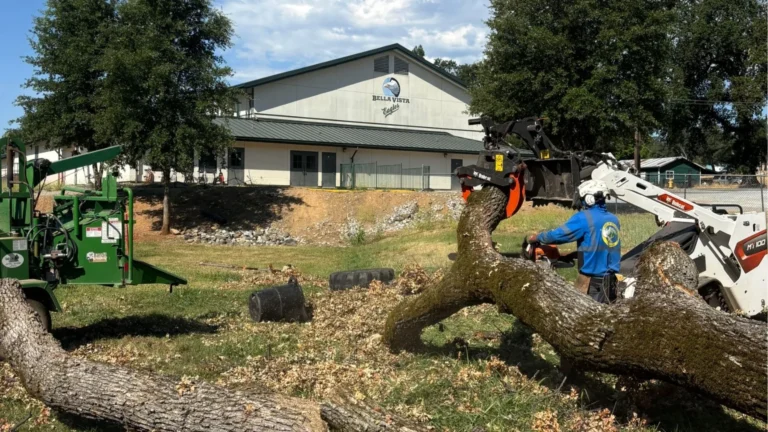
When a parcel is genuinely overgrown, land clearing comes first. It is the heaviest of the four and it is what opens the property back up, taking out overgrowth, scrub and unwanted small trees so there is something to work with underneath. This is usually the call before a build, a fence, a corral or a sale.
Brush removal for the edges and the woody growth
Brush removal is the more targeted version. It handles the thick woody material along fence lines, creek banks, ditches and property boundaries, along with brush piles and downed wood left from storms or from previous tree work. On a property that is otherwise in decent shape, this is often the only clearing needed.
Weed removal around the things that matter
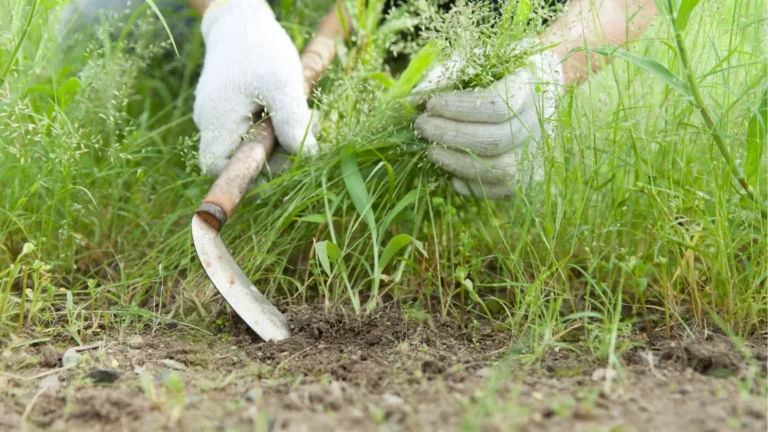
Weed removal is close-in work: the growth coming up against foundations, under decks, along walkways and driveways, around propane tanks and outbuildings, and through gravel and hardscape. It is the part of the job that lines up most directly with that first 30 feet of defensible space.
Weed mowing to hold the open ground
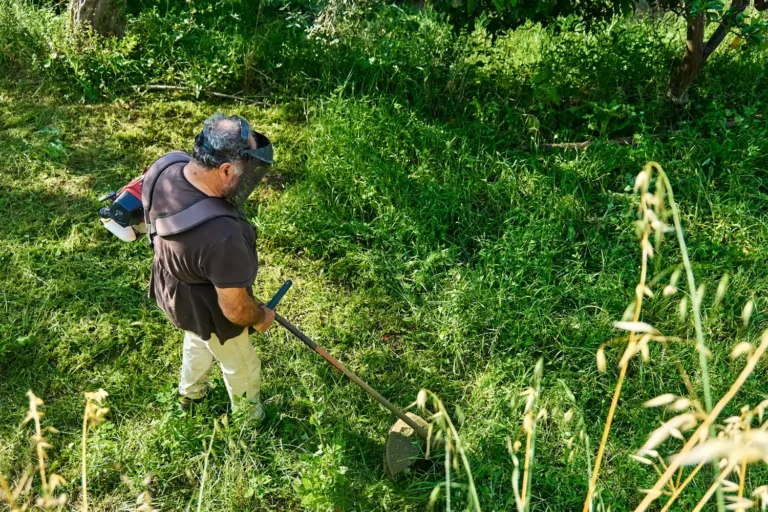
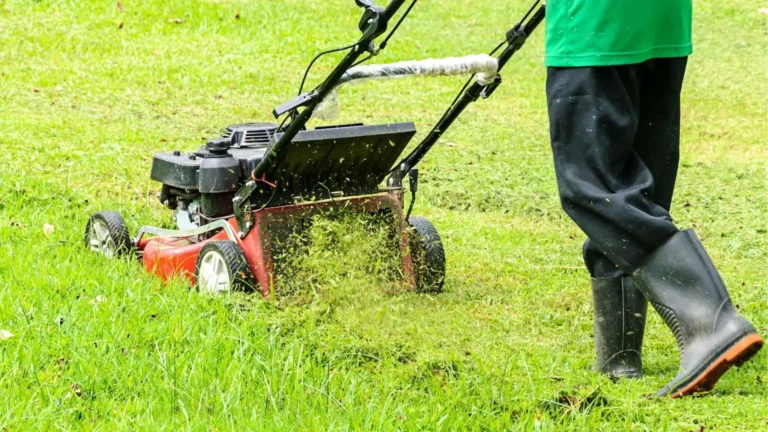
Weed mowing is what keeps the rest of it in check. Across pasture, fields, vacant lots and the wider parts of a property, mowing knocks growth down before it cures and keeps the fuel low through the season. Properties with real acreage often want this more than once between spring and the end of summer.
What happens when we come out
Every job starts with a free estimate. We walk the property with you, look at what is actually there rather than what a photo suggests, and talk through what needs clearing now against what can reasonably wait. Access matters as much as acreage on this kind of work, so we look at how equipment gets in, what the slope is doing, where structures and fence lines sit, and what is underneath the growth before anything is quoted.
From there you get a price and a scope, and nothing is scheduled until you have both. Tree of Righteousness is licensed and insured, California License #1096813.