What we are usually called for in Lakehead
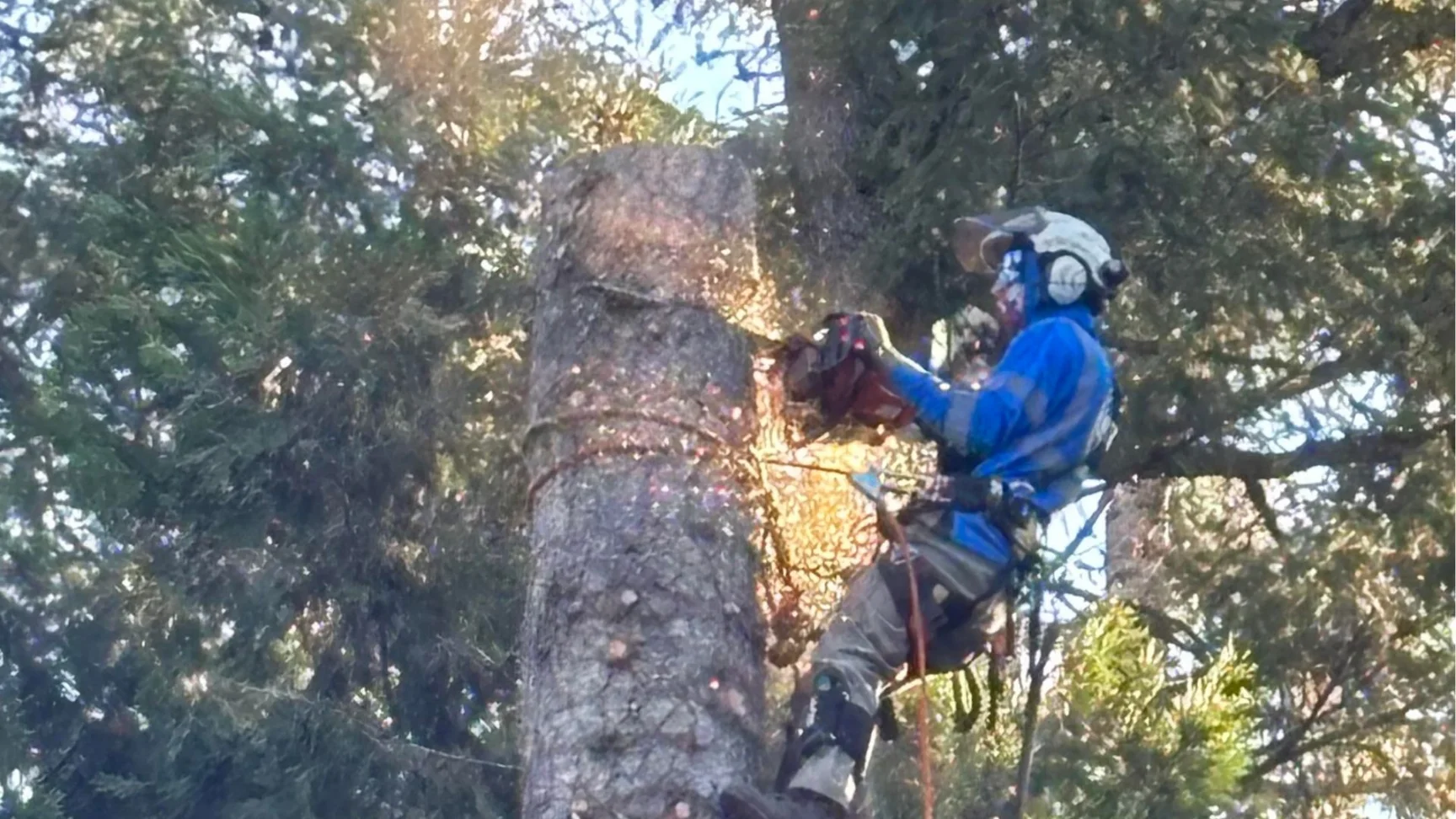
Most of the work here comes down to planned removals on slopes and tight access, dead and dying pine removal, limb reduction over roofs and drives, and cleanup that accounts for the terrain.
- A tree is leaning, splitting, or dropping limbs
- Branches are touching a roof, drive, or power drop
- A stump is left over from earlier work
- Brush or weeds have taken over part of the property
- A tree has died back and needs to come down
What the ground is like in Lakehead
Lakehead sits at about 1,450 feet at the north end of Shasta Lake, strung along I-5 where the valley has already given way to timber. Ponderosa and Douglas fir, incense cedar and oak grow close together on ground that rarely stays flat for long, and a good share of properties run downhill from the road toward the water.
That combination is what makes tree work here different. Trees are tall, stands are dense, and the drop zone a crew would want is often occupied by a deck, a shed, a septic field or the neighbour’s roof. Removals get planned around access and where the wood can safely go, rather than simply felled.
Slope also changes what happens after the cut. On level ground the wood is where you left it; on a pitch it moves, and the cleanup has to account for that before the first cut rather than afterwards.
Fire is not a hypothetical here
The western part of Lakehead was closed to the public during the 2018 Carr Fire, and nobody in this stretch of the county needs the risk explained to them. California Public Resources Code 4291 asks for 100 feet of defensible space around structures, in two zones: 0 to 30 feet where dead material comes out and plants get spaced, and 30 to 100 feet where the overall fuel load comes down.
In dense conifer that mostly means removing ladder fuel, taking out standing dead, and lifting the lower canopy away from roofs and decks. We are a tree service and not a fire agency, so we cannot certify a property. We can do the work an inspector is looking at, and tell you honestly what we would prioritise if the budget only stretches so far.
Vacation homes and part-time owners
A fair number of properties around Lakehead are not lived in year round, and that shows up in the work. Nobody notices a limb resting on a roof in March if the family is not up until June. Deadwood accumulates quietly. Brush closes in on a driveway over two seasons.
If you are not on the property often, it is worth having someone look at the trees before a season rather than after a storm. Photos help us give you a useful answer before anyone drives out.
What we get called for most
- Planned removals on slopes and tight access, taken down in sections
- Dead and dying conifers, often several on one parcel
- Limbs over roofs, decks, drives and power drops
- Defensible space clearing around cabins and outbuildings
- Storm damage, including limbs hung up in the canopy
- Stumps left over from earlier work, in rocky or root-bound ground
Services available in Lakehead