CA License #1096813
Your tree may be sending signals long before a limb fails, leaves thin out, or a trunk problem becomes obvious. You might notice sparse growth, dead branches, unusual leaf color, cracked bark, leaning, or a canopy that looks weaker than last season. A careful tree health assessment helps you understand what is changing and what should be done next.
Tree of Righteousness provides tree health assessment for homeowners across Redding, California who want clear answers, safe recommendations, and practical next steps. We look at visible stress, structural concerns, and signs of decline so you can make informed decisions about trimming, removal, stump grinding, or other care before a small issue becomes a larger one.
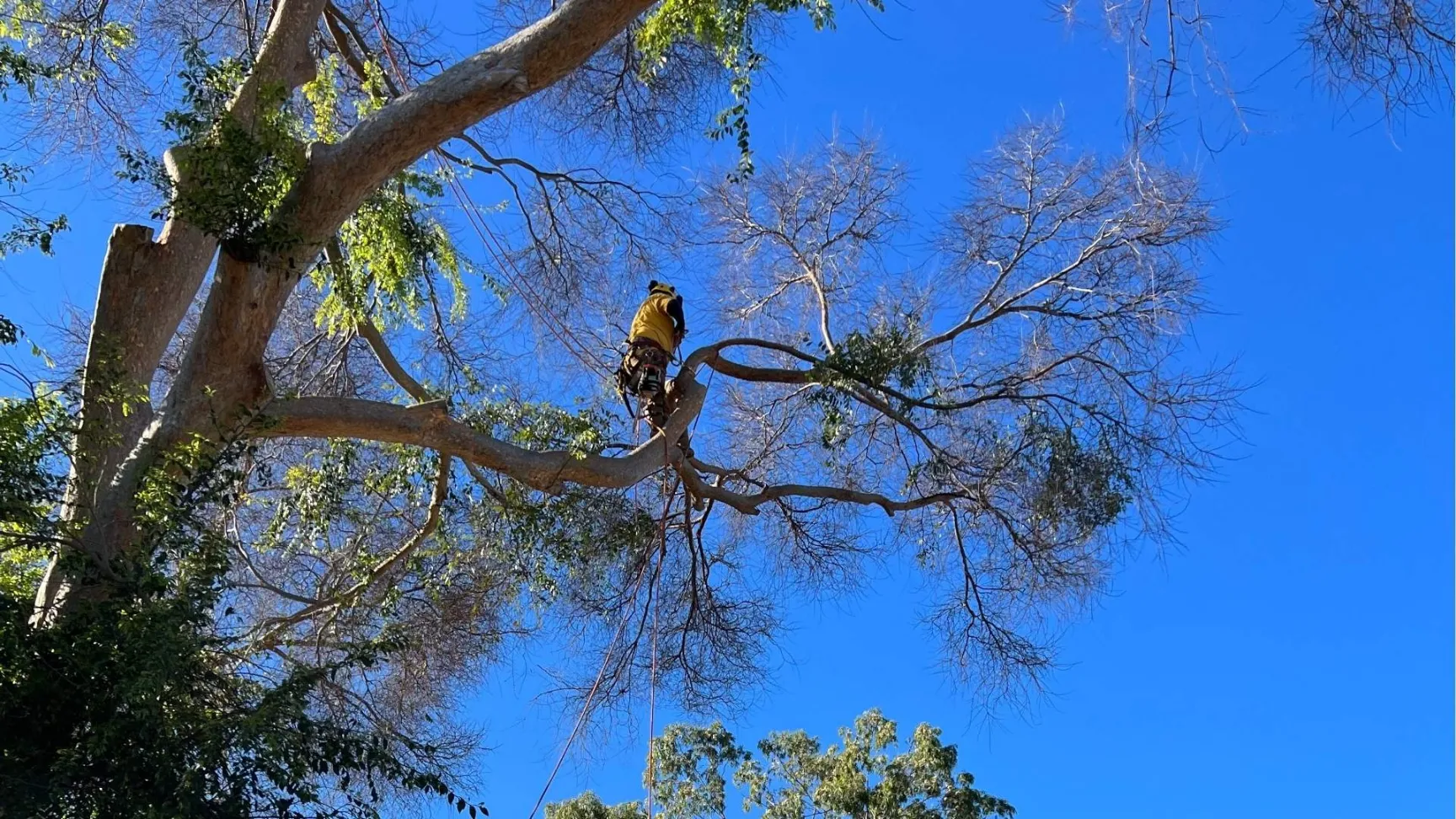
A useful assessment starts with more than a quick glance. We examine the tree from the roots area up through the canopy, looking for signs that affect strength, stability, and long-term condition.
We also consider whether the tree is crowding nearby structures, growing into other trees, or creating hazards through branch weight and shape. The goal is not to point out every flaw. The goal is to identify what matters for safety, appearance, and tree longevity.
Homeowners often call after they notice a tree looking different, but it helps to know what those changes may mean. Some signs are cosmetic, while others suggest the tree is under stress or losing strength.
Leaves that are smaller than usual, pale, spotted, curled, or dropping early can indicate water stress, root trouble, disease pressure, or canopy decline.
Dead tips, scattered dead limbs, or large bare sections often show that parts of the tree are no longer supporting healthy growth.
Open cracks, soft spots, hollow areas, and bark loss can weaken the tree’s structure and deserve a closer look.
When roots are exposed, damaged, compacted, or lifting soil, the tree may lose stability even if the canopy still looks acceptable.
If a tree has been through a storm, heavy pruning, or years of neglect, those stress points can add up. A tree may survive for a while, but the assessment helps show whether it needs corrective trimming, removal, or continued monitoring.
Our process stays simple so you can get answers without confusion. Tree health assessment should feel clear from the first call through the final recommendation.
This approach works well for homeowners who want straightforward guidance rather than a vague opinion. You get a practical read on the tree, and you can decide what makes sense for your property.
Tree of Righteousness focuses on safety, tree condition, and property protection. During a tree health assessment, we look at both the tree itself and the surroundings that may affect its stability or recovery.
That means checking how close the tree is to structures, where the weight sits, whether a heavy limb is growing over an important area, and whether a decline pattern is isolated or spreading. A tree can appear full from one side while showing serious thinning, branch dieback, or structural weakness from another angle.
We also pay attention to trees that have been shaped by repeated pruning or previous damage. Some trees recover well with trimming and selective care. Others may have decay or imbalance that makes removal the safer choice. A solid assessment helps separate those situations.
Some trees only need selective tree trimming or tree pruning to reduce weight, remove dead wood, or improve structure. This can support the tree while lowering strain on weak limbs.
If a tree has major decline, severe structural issues, or a hazard that cannot be corrected, tree removal may be the recommended path. We explain that clearly so you understand why it is the right call.
Many customers are not sure whether a tree is truly failing or just going through a seasonal change. These common observations often lead to a useful assessment.
Even if the tree still looks stable, those clues can reveal a deeper issue. Getting the tree checked early may help reduce the need for larger corrective work later.
Tree conditions can vary from property to property across Redding, California, and the right assessment has to account for what the tree is showing right now, not guesswork. We work with homeowners who want direct guidance and careful attention to the trees that matter around their homes.
Because we also serve nearby areas such as Anderson, Shasta Lake, Palo Cedro, Cottonwood, Igo, Bella Vista, Happy Valley, we understand that tree concerns often come down to one simple question: is this tree worth saving, or is it becoming a risk? A solid assessment gives you a grounded answer.
When a tree is unhealthy, overgrown, storm-damaged, or showing structural decline, it should be evaluated before the condition worsens. A careful look now can help protect landscaping, structures, and the rest of the trees on the property.
Contact us today and receive a no-obligation estimate that is clear, fair, and customized to your needs.
Choose a time that works best for you, and we’ll make all the arrangements to ensure everything runs smoothly.
Once scheduled, simply sit back and let our team handle the rest. We’ll take care of the work with excellence and care, so you can enjoy complete peace of mind.
Once the tree has been reviewed, you will have a clearer path forward. Some trees need no immediate work beyond observation. Others benefit from trimming or pruning. Some need stump grinding after removal. And some require a more complete plan when several trees or brush areas are involved.
If the assessment shows the tree is declining but still salvageable, we can outline the type of care that supports it. If the tree is already beyond practical recovery, we explain the reasons and the next steps with straightforward language. Either way, the goal is to give you useful information, not uncertainty.
Tree of Righteousness keeps the process simple: request a free estimate, get scheduled, and wait and relax while the condition of your tree is reviewed with care.
It can reveal signs of disease, decay, structural weakness, root stress, branch failure, canopy decline, and storm-related damage. It also helps identify whether the tree is still a good candidate for trimming or should be considered for removal.
Yes. A tree may look full from a distance while showing deadwood, trunk cracks, root disturbance, or imbalance up close. That is why a hands-on assessment matters.
If a tree has been trimmed heavily or has lost limbs during storm damage, an assessment can help determine whether the remaining structure is stable and whether more care is needed.
Yes. Older trees may have hidden decay, limited vigor, or past damage that affects their long-term condition. An assessment helps you decide whether the tree should be monitored, trimmed, or removed.
Uneven decline can still point to a real problem. A damaged root zone, internal decay, or poor limb structure may affect one side first before the rest of the tree shows visible changes.
If the tree has major trunk decay, severe lean, large dead sections, or root instability, pruning may not be enough. A full assessment helps determine whether trimming, removal, or another option is more appropriate.